
Student life · Faith and revision
Through Exam Season with Faith: Duas for Muslim Students
How to prepare for exams, stay focused, overcome stress, and seek Allah's blessings in your studies.
The books are open, your phone is finally out of reach, and the exam date is getting closer. You know you need to begin, but your mind is already several steps ahead: the topics you have not covered, the questions you might forget, the grade you hope to achieve.
If that feeling is familiar, you are not alone. Whether you are preparing for GCSEs, A-levels, university assessments or medical school exams, revision can bring both hope and uncertainty. Faith does not require you to pretend that it is easy. It offers a way to meet the work in front of you with purpose, practical effort and trust in Allah.
A quiet beginning
Before you reach for your notes, give yourself a moment to arrive. You do not have to solve the whole syllabus this morning. You only need to decide what a useful first step looks like. Perhaps it is a small set of practice questions, a difficult concept explained aloud, or one essay plan.
Begin with Bismillah, and remember why you are learning. Beyond the next mark or certificate, there is knowledge that can help you understand the world and benefit other people. For a medical student, that might mean becoming better prepared for the person who will one day need your care.
بِسْمِ اللَّهِ
Transliteration: Bismillah
Meaning: In the name of Allah.
Then ask Allah to increase you in knowledge. This short supplication comes from the end of Surah Taha, verse 114. Let it accompany your learning as a reminder to remain curious and humble, even when a subject begins to feel familiar.
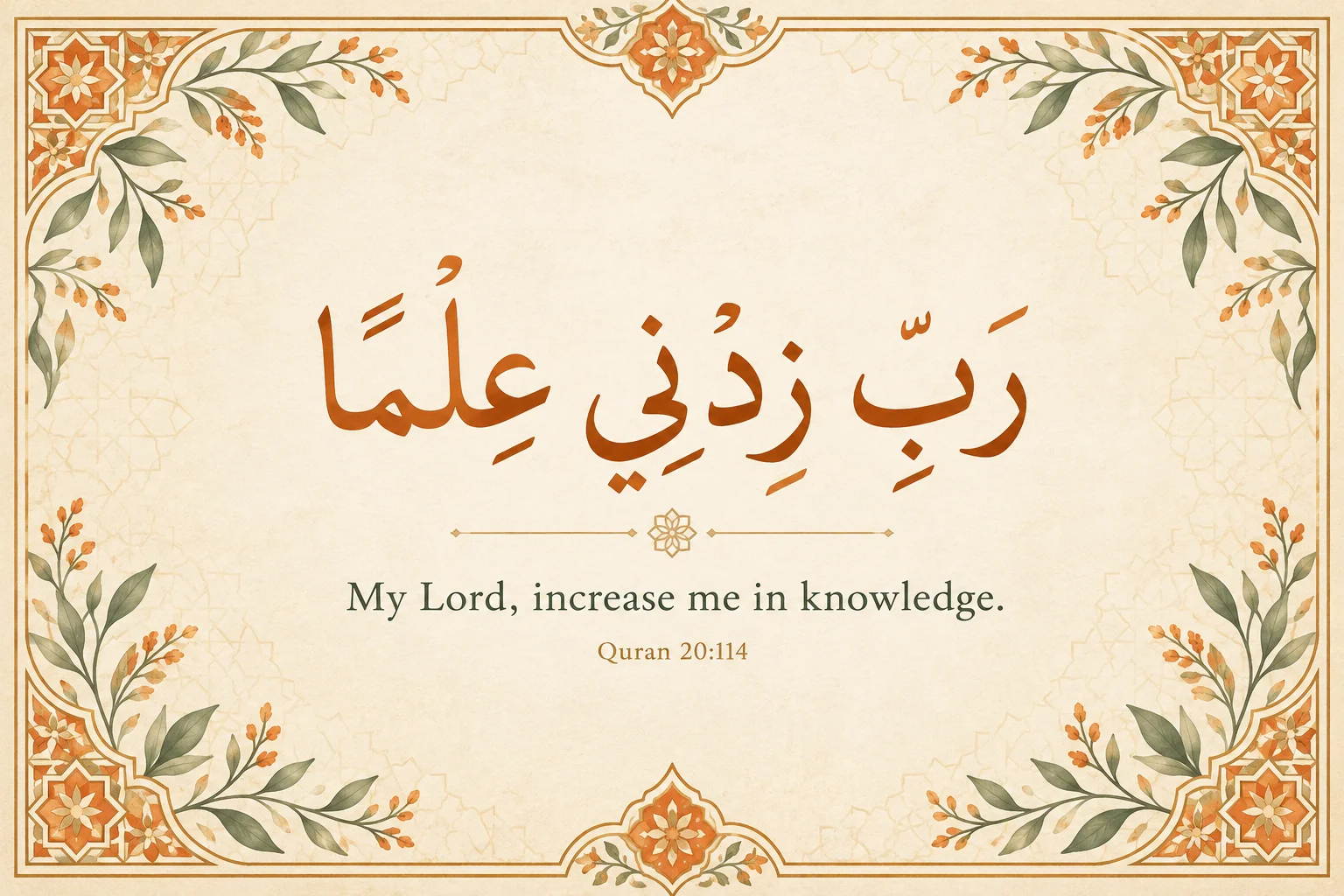
رَبِّ زِدْنِي عِلْمًا
Transliteration: Rabbi zidni ‘ilma.
Meaning: My Lord, increase me in knowledge.
Source: Surah Taha, 20:114
Finding a rhythm you can return to
Once you begin, the challenge is often making the day manageable. A revision timetable should give you direction without making every spare minute feel like a debt. Put teaching, travel and other commitments into your plan, then make room for salah, meals, movement and sleep. Fit a few clear study goals around them.
Prayer can give your day a natural rhythm: a chance to step away from a screen, reconnect with Allah and return to the next task. In Surah Ar-Ra'd, 13:28, we are reminded of the reassurance found in remembering Allah. Check local prayer times and plan ahead if an assessment or placement makes arrangements more complicated.
Try a focused session of 25–30 minutes followed by a short break, then adjust it to suit your concentration. During the session, do something that makes you retrieve knowledge: close your notes and explain an idea, work through a past-paper question, or ask a friend to test you. Afterwards, identify the gap and decide when to revisit it.
Some days will be less productive than you hoped. Return to the next small task without turning a difficult afternoon into a verdict on your ability. Your plan is there to help you start again.
When the page stops making sense
There will be a topic that refuses to settle. You read the same paragraph, get another question wrong, and wonder why everyone else seems to understand it. Pause before that frustration becomes your whole story. A difficult topic is a reason to change your approach or ask for help.
Try a worked example, explain the problem to a teacher, or practise with someone who can show you where your reasoning changes course. Alongside that effort, turn to the prayer of Musa (peace be upon him), made when he faced a great responsibility:
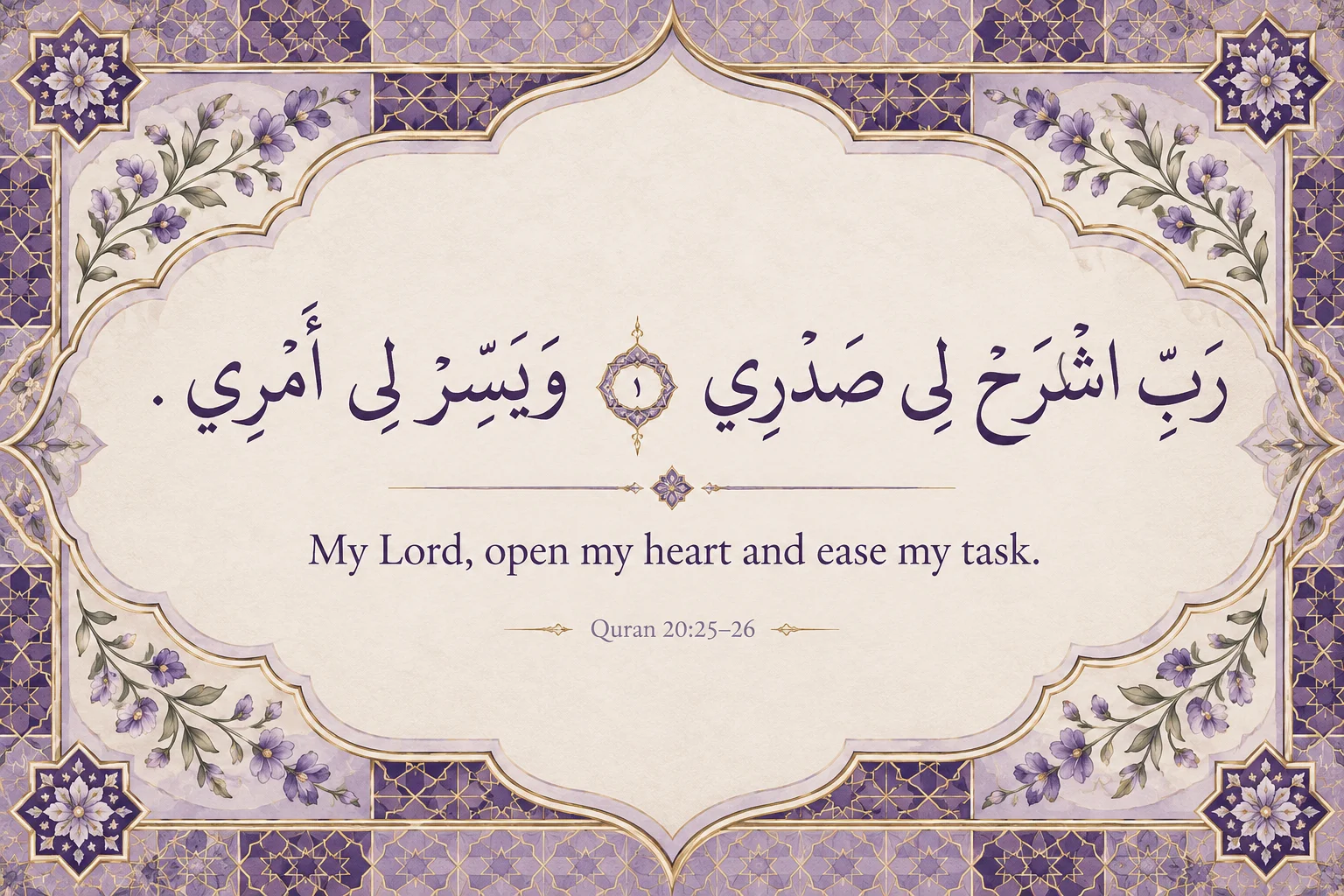
رَبِّ اشْرَحْ لِي صَدْرِي وَيَسِّرْ لِي أَمْرِي
Transliteration: Rabbishrah li sadri, wa yassir li amri.
Meaning: My Lord, open my heart and ease my task.
It can also help to step away from other people's revision updates. A classmate's long study session does not tell you what they understood, what support they have, or what else is happening in their life. Look instead at your own progress: something you can explain today that you could not explain yesterday.
If worry follows you beyond the desk, remember that feeling anxious does not mean your faith is weak. The Prophet Muhammad (peace be upon him) sought refuge in Allah from worry and grief. These words are part of a longer supplication:
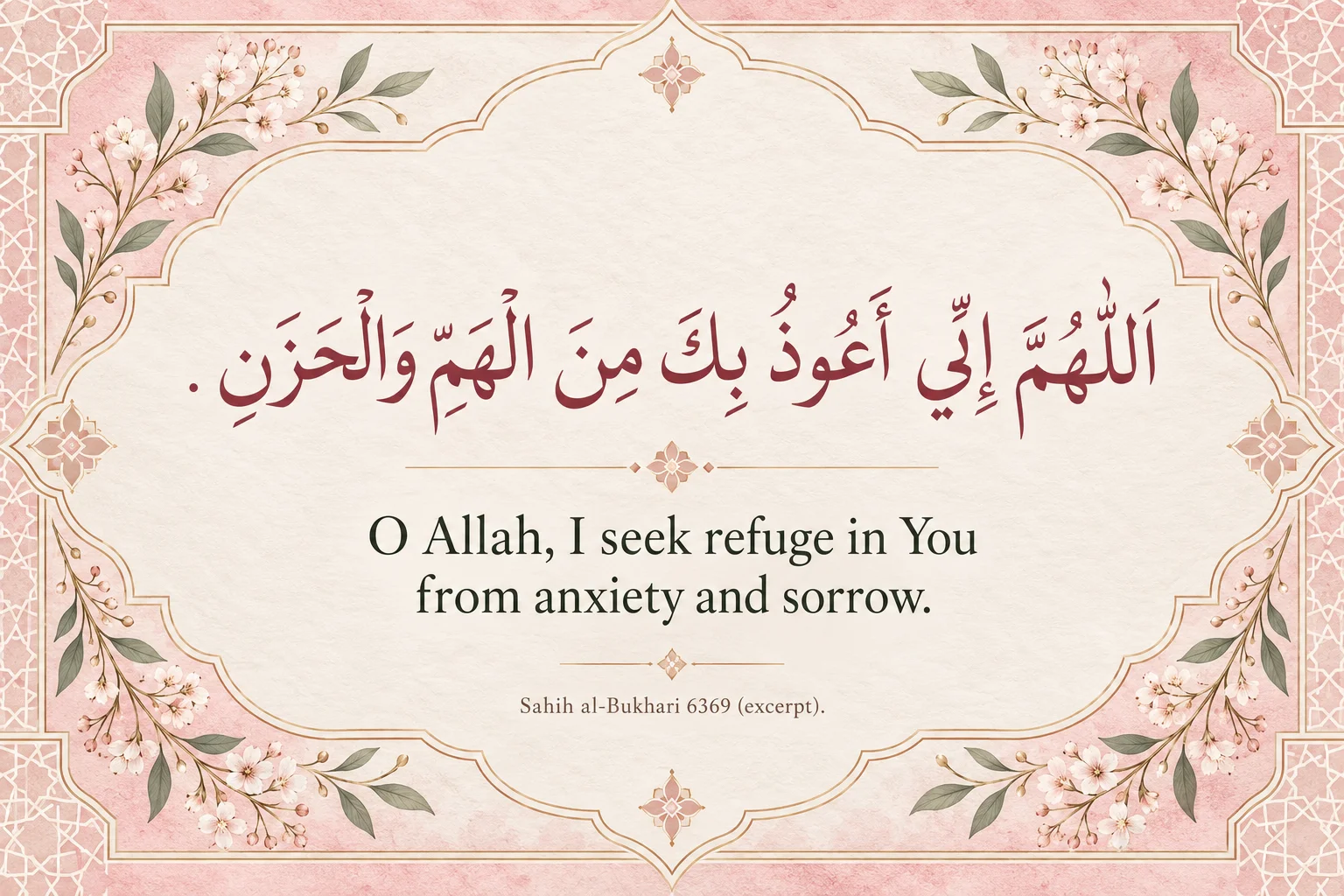
اللَّهُمَّ إِنِّي أَعُوذُ بِكَ مِنَ الْهَمِّ وَالْحَزَنِ
Transliteration: Allahumma inni a‘udhu bika minal-hammi wal-hazan.
Meaning: O Allah, I seek refuge in You from anxiety and sorrow.
Source: Sahih al-Bukhari 6369 (excerpt)
Give yourself practical support too: enough rest, regular meals, breaks and someone you can speak to honestly. If anxiety is affecting your daily life, contact your tutor, student support service or a healthcare professional. You do not have to carry it alone.
Walking into the exam
Eventually, the morning you have been preparing for arrives. Pack your permitted equipment, check your route and leave enough time to reach the venue. There may still be a flutter of nerves. You can feel that and take your next step.
This is a moment to practise tawakkul: make your effort and place your trust in Allah. The instruction to take practical precautions while relying on Allah is illustrated in the narration about tying one's camel, recorded in Jami' at-Tirmidhi 2517. You have revised, sought help and practised. Now bring your attention to what you can do in the room.
Before you enter, you might quietly make this supplication for ease:
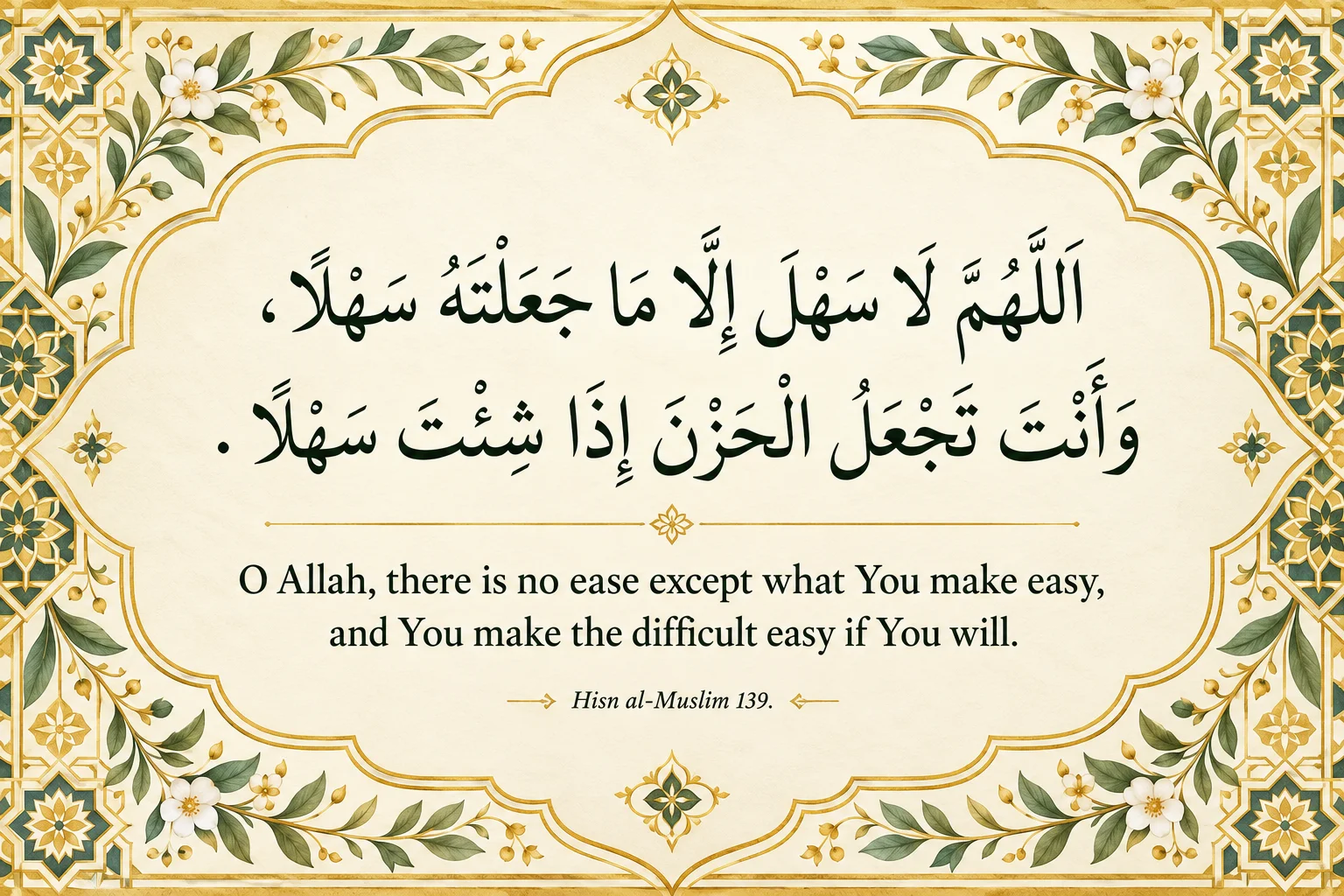
اللَّهُمَّ لَا سَهْلَ إِلَّا مَا جَعَلْتَهُ سَهْلًا، وَأَنْتَ تَجْعَلُ الْحَزْنَ إِذَا شِئْتَ سَهْلًا
Transliteration: Allahumma la sahla illa ma ja‘altahu sahla, wa anta taj‘alul-hazna idha shi’ta sahla.
Meaning: O Allah, there is no ease except what You make easy, and You make the difficult easy if You will.
These duas can accompany your revision and exams; they are not an exam-specific ritual with a required repetition count or a promise of a particular grade. You can also ask Allah for help in your own words.
Once the exam begins, read the instructions and take each question as it comes. If your mind goes blank, pause and take a few gentle breaths. Find one detail you recognise and begin there. If the format allows, move past a difficult question and return to it later. Keep your attention on the next useful action.
When you close the paper
Outside the exam hall, it is tempting to reconstruct every answer with your friends. Before you do, give yourself a little space. The paper is finished. You can learn from it later without spending the rest of the day inside it.
Say Alhamdulillah for the opportunity to learn and for the effort you were able to make. Eat, rest, speak to someone you enjoy being with, and return to your next subject when you are ready.
الْحَمْدُ لِلَّهِ
Transliteration: Alhamdulillah
Meaning: All praise is due to Allah.
When results arrive, there will be room for gratitude, reflection and another decision. A strong result is something to be thankful for. A disappointing one may call for advice, a resit or a different plan. Neither tells the whole story of who you are or what you can offer.
For now, return to the desk in front of you, the knowledge you hope to gain and the next small step. Begin with intention, prepare with care, and trust Allah with what lies beyond your control.
May Allah grant you beneficial knowledge, ease in your studies and the ability to use what you learn to help others. Ameen.